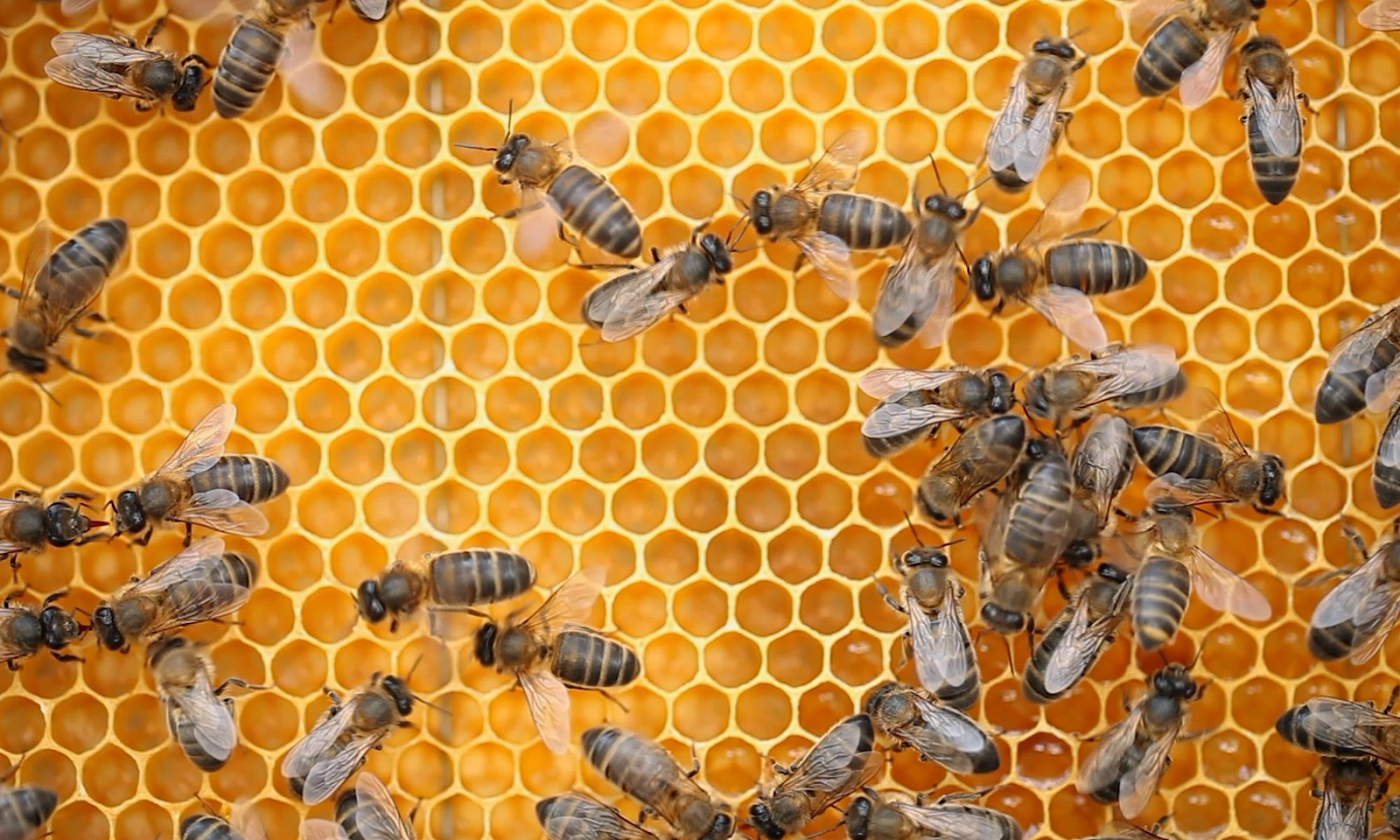
If you’ve seen any of the ‘fake honey’ headlines over the last few years, you might have found yourself in the supermarket, jar in hand, wondering what’s actually in it. The supermarkets will tell you it’s honey and that they test to make sure, but the evidence of the last few years makes that harder to take on trust, and the reasons why say a fair bit about how honey gets from the hive to the shelf.
Why honey attracts fraud
Honey is valuable. The world wants a lot of it, and making the real thing takes trillions of honeybees a great deal of work, so there’s always money to be made making it stretch a little further than it ought to. The usual method is adulteration, which means mixing in cheaper sugar syrups (made from rice, wheat or sugar beet, among other things) and selling the result as honey. In the UK that’s against the law, and anything sold as honey has to be exactly that, with nothing added to it.
The scale of the problem became much clearer in 2023, when the European Commission published the results of a coordinated investigation called ‘From the Hives’. Of 320 consignments of imported honey sampled at EU borders, 46% were suspected of being bulked out with sugar syrups. All ten samples that came from the UK were flagged, which the commission put down to honey produced in other countries being blended here before being sold on. The UK is no longer part of the EU’s food fraud network, and in 2024, we imported more than 46,000 tonnes of honey from China, making them by far our biggest overseas supplier, where adulteration with syrup is a known risk. British supermarkets say they check their suppliers and test regularly, although a jar can pass a test and still not be what it claims to be.
The trouble with testing
Proving that nothing has been added is much harder than it sounds. Honey varies enormously: its make-up shifts with the flowers the bees have worked, the country it was produced in and even the weather that season, so there’s no single profile to check a sample against. Meanwhile the syrups used to bulk it out have become far more sophisticated, and each time a new test catches one method, the fraudsters move on to another and the labs have to catch up again. Honey fraud on this scale is lucrative enough that the people behind it can afford to keep investing in staying one step ahead.
The same problem undermines most of the ‘how to spot fake honey’ tricks on social media. Real honey doesn’t always sink in a glass of water, and please don’t set fire to it. Crystallised honey isn’t proof that it’s genuine any more than runny honey is proof that it’s fake, because how quickly honey sets depends mostly on the balance of sugars in the nectar the bees collected, and partly on whether it was heated during packing, which keeps it liquid for longer.
What the label tells you
Turn a jar of supermarket honey over and there’s a good chance the small print says ‘blend of honeys from more than one country’. That’s perfectly legal in England, but it leaves the obvious questions unanswered: which countries, and how much from each?
The rules have moved on elsewhere. Since 14 June 2026, honey sold in the EU and Northern Ireland has had to name every country in a blend, listed from largest share to smallest with the percentage from each, although stock labelled before that date can stay on sale until it runs out. In England, packers can still get away with the much vaguer wording.
Blending different honeys isn’t fraud in itself. Big packers need huge volumes and they need every jar to match, because customers expect this month’s jar to look and taste like last month’s, and bees are spectacularly unhelpful in this respect. Honey changes with whatever is in flower, where the hives are sitting and what the weather has been doing, so one crop can be pale and delicate and the next dark and strong, and mixing honey from different places and harvests is how a packer irons all of that out. The catch is that the more sources go into a blend, the easier it is for an adulterated consignment to disappear into it, and a label that only says ‘more than one country’ gives you no way of knowing what you’ve bought.
Why our honey changes from jar to jar
We don’t particularly want consistency, because the bees know what they’re doing and we’d rather let each harvest be what it is. Every jar of our pure Suffolk honey comes from our own bees, kept in our own apiaries here in Suffolk, and we extract it ourselves in our honey room. Each harvest from individual hives stays as a separate batch rather than being mixed with the others to make everything look and taste the same.
That means a jar from the spring harvest can be completely different from one filled in the summer, and a jar from one hive can be a different colour and consistency from one taken from the neighbouring hive at the same time. The flavour shifts too, and some batches set within weeks while others stay runny for months (our post on how to store honey explains why). When someone asks why their new jar isn’t quite like the last one, the honest answer is that the bees made a different honey, and that’s what we like about it.
Should you stop buying supermarket honey?
Nobody’s asking you to boycott the honey aisle, and as beekeepers rather than the honey police, we’re not going to tell you never to buy a jar there. What we would say is that a low price and a label reading ‘blend of honeys from more than one country’ tell you very little, and that’s exactly where the evidence suggests the risk lies.
If knowing where your food comes from matters to you, buy honey with clear provenance. Read the label, find out where it was produced and, where you can, buy from an actual beekeeper near you who can tell you where their bees actually are, how the season went, what they produced and why. We can probably tell you more about your jar than you ever wanted to know, and we’re always happy to be asked.